Iran Declares Victory Over US: Stunning Bold Move


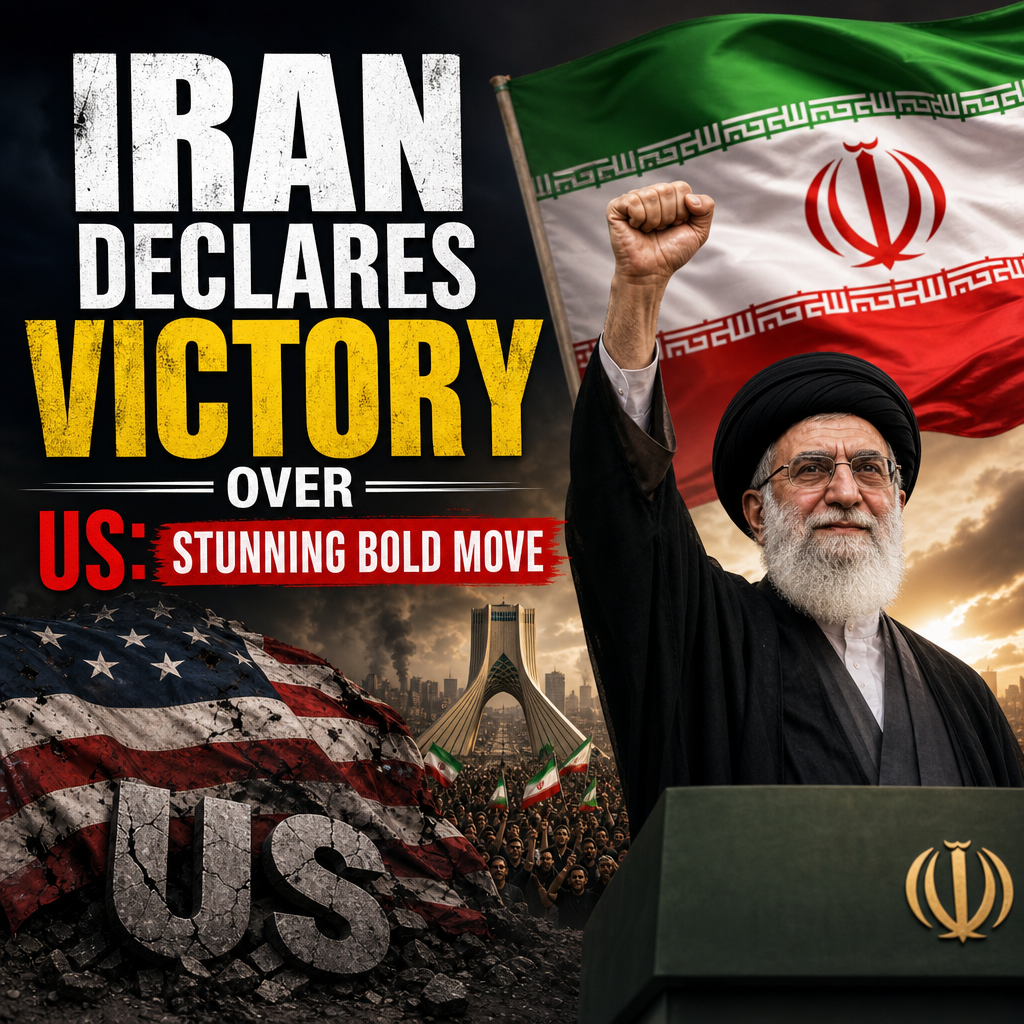
Iran declares victory over US after the latest round of confrontation, but the claim says as much about political messaging as it does about battlefield outcomes. In the aftermath of heightened tensions, Tehran is presenting the moment as proof that it can withstand American pressure, while Washington and its allies appear far less willing to accept that framing at face value. The truth likely sits somewhere in between: Iran may have gained a propaganda win, but that is not the same thing as a strategic triumph.
What Iran is trying to signal
Across the coverage, one theme stands out clearly: Iran’s leaders are eager to turn a volatile standoff into a story of resilience. That matters because, in international politics, declaring victory can be almost as important as achieving it. By insisting it has come out on top, Tehran is trying to reassure its domestic audience, shore up support among regional allies, and project confidence at a time when sanctions, military pressure, and diplomatic isolation continue to shape its options.



This is not unusual for Iran. The Islamic Republic has long framed confrontation with the United States as proof of defiance rather than weakness. That narrative plays well at home, especially when economic hardship and external pressure make leadership legitimacy harder to sustain. A victory claim allows officials to suggest that even if the country has endured damage, it has not been broken.
That said, the sources also suggest that the meaning of “victory” is deeply contested. In one reading, Iran has successfully shown that it can absorb pressure and still influence events. In another, the claim is mostly rhetorical—an attempt to convert a tense, ambiguous situation into a political success story.




Iran declares victory over US: why the message resonates
There are at least three distinct perspectives emerging from the reporting:
– Iran’s perspective: resilience equals success. If the country remained standing, retaliated in some form, or forced the US to think carefully about escalation, officials can present that as victory.
– The US and allied perspective: a declared victory does not change the balance of power. Washington is likely to view any Iranian triumphalism as messaging, not evidence of real strategic gains.
– Regional and independent analysts’ perspective: the confrontation may have produced no clear winner, only a temporary pause in a cycle that remains dangerous.
That last point is especially important. In conflicts like this, both sides often declare success because the alternative—admitting stalemate, restraint, or vulnerability—can be politically costly. For Iran, victory language helps offset domestic pressure. For the United States, avoiding overreaction can be framed as prudence rather than retreat.
The challenge for outside observers is separating symbolism from substance. Did Iran gain deterrence value? Possibly. Did the US avoid a wider war? Also yes. Did either side achieve a decisive strategic breakthrough? That is much less clear.
How Al Jazeera and Sky News frame the bigger picture
Al Jazeera’s broader regional coverage tends to emphasize the human and diplomatic cost of escalation: the risk to civilians, the instability spread across the Middle East, and the difficulty of rebuilding trust once red lines have been crossed. That lens matters because it reminds readers that even when leaders trade boasts, the consequences are often measured in insecurity, displacement, and economic strain rather than simple wins and losses.
Sky News, meanwhile, typically highlights the geopolitical stakes for Europe, the Gulf, and global security. From that perspective, the key question is less whether Iran can claim victory and more whether the episode pushes the region closer to a wider conflict or opens space for temporary de-escalation. The worry is that bold public statements can box governments into harder positions, making compromise more difficult later.
Put simply, the broader media picture suggests this is not a neat win-or-lose moment. It is a fragile political episode in a long-running rivalry, with each side trying to shape perception before the next move is made.
What actually changed?
Even if Tehran’s announcement boosts morale, the practical consequences are more complicated. A declared victory can influence public opinion, but it does not automatically improve economic conditions, ease sanctions, or resolve security threats. It may also harden attitudes in Washington and among regional rivals, who could interpret the statement as evidence that pressure must continue.
A few realities remain in place:
– Iran still faces major economic constraints.
– The US still retains significant military and diplomatic leverage.
– Regional states remain wary of a broader confrontation.
– None of the underlying disputes have been fully resolved.
That makes the claim of victory both understandable and limited. It is understandable because leaders need to narrate events in a way that supports their position. It is limited because political declarations cannot erase strategic vulnerabilities.
The bottom line
The most balanced reading is that Iran may have won a communications battle, but not necessarily a lasting strategic one. The declaration is powerful because it speaks to confidence, survival, and defiance—all themes that resonate deeply in Iranian politics. Yet from a wider perspective, the situation looks less like a decisive turning point and more like another chapter in a tense rivalry where both sides are trying to avoid looking weaker than the other.
In that sense, the boldness of the move is real, but so is the uncertainty around its meaning. Iran can say it has prevailed. Whether that claim holds up in the longer run will depend on what comes next: diplomacy, retaliation, restraint, or another escalation. For now, the only certain thing is that the contest over narrative is still very much alive.